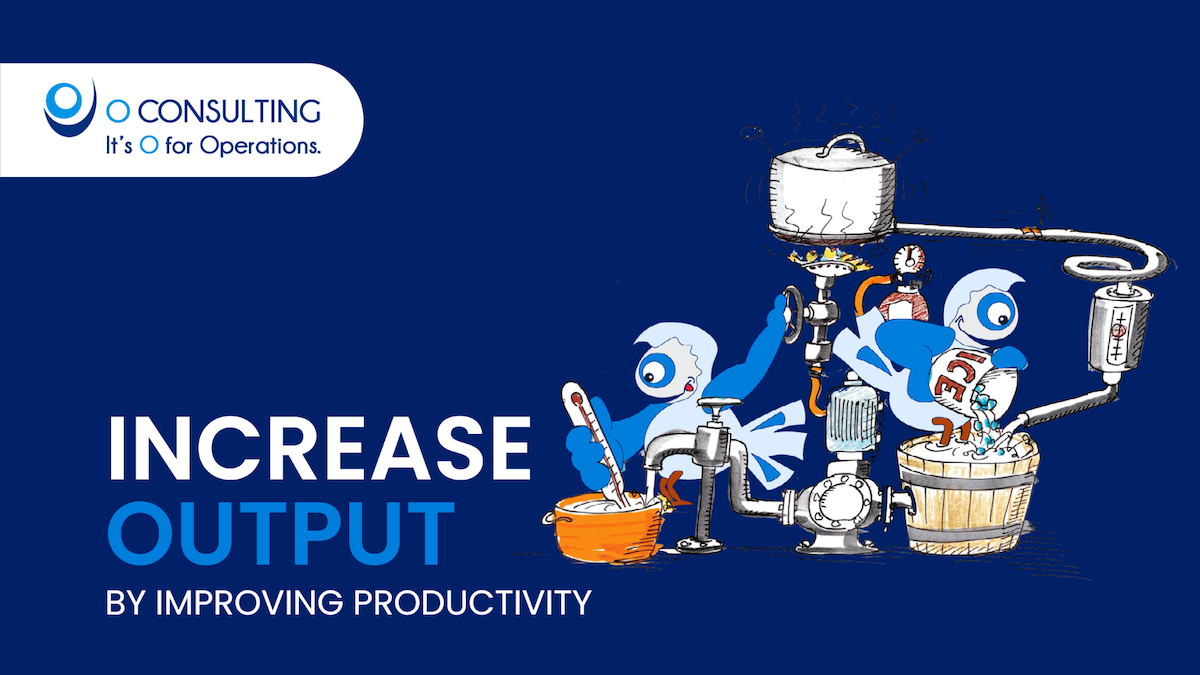
O'PEEP'S PRODUCTIVITY EXPLANATION
You have 3 chickens in your garden and all together lay 15 eggs a week - 5 eggs on average per chicken. Your neighbor has 3 chickens as well, but they lay 21 eggs a week - one egg per chicken a day. Their productivity is higher than yours!
In case you operate a chicken farm you are calculating in other dimensions. Maybe you calculate 120 kg of egg per stable per day. Or, building on productivity per area: 6 eggs per square meter a day. Productivity has various modes of expressions, but in the end it’s always about output per input.

Increasing productivity is exactly our field of competence. We would be happy to give you tips on your specific challenge! Contact us!
Read more about increasing productivity, have a look at our blogpost!
(1).png)
First clarify which specific output is important for your business. This value must be above the line. Under the bottom line there must be the critical, scarce resources. Often this is described as the bottleneck resource.
More sales, more profit, and happier customers means more output without additional equipment and with the same workforce. This means reducing manufacturing costs and achieving greater delivery reliability. All in all, improving productivity
First of all we need to know what we want to get out of our system - what is the aimed output? After the aimed output of production is determined, we have to take a look at the limiting factors within the production. Where are these limiting factors that prevent us from reaching the aimed output? Where are the bottlenecks?
Is it all about:
Once the limiting factors within the production are found, the levers to improve productivity can be identified. It needs to be clear for everyone involved in the process what exactly these levers are. Afterwards it’s usually obvious what needs to be done. Further development of classic board management structures brings the required implementation success. The relevant productivity indicators must of course be anchored in the process and combined with structured problem-solving methods.

Our courses are practical and focused, helping you build the skills that make a real difference
MORE INFO - Join the open Green Belt